
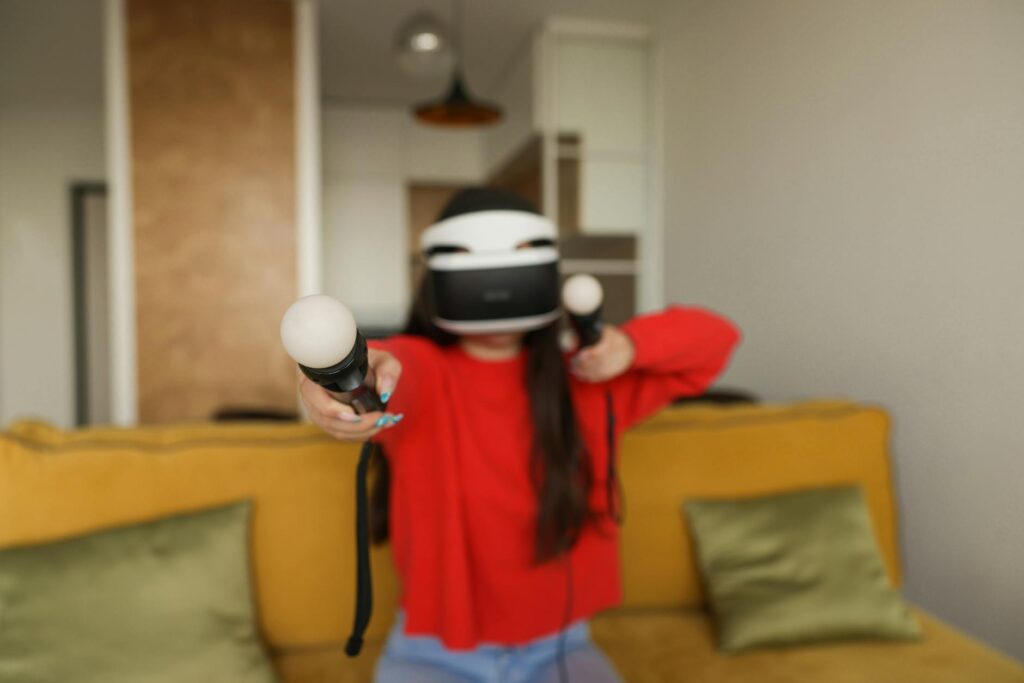
Spatial Computing at Home: How AR Will Change Smart Home Control
For over a decade, our primary interface with the digital world has been a flat pane of glass. In the smart home, this has translated to wall-mounted tablets and countertop smart displays. But the rapid advancement of headsets like the Apple Vision Pro and Meta Quest signals a paradigm shift. We are entering the era of spatial computing smart home integration, where the physical and digital worlds seamlessly merge.
As we project into 2026 and 2027, it's clear that the future of home automation isn't about adding more screens to our walls—it's about removing them entirely and replacing them with augmented reality (AR). The smart display as we know it is going extinct, and what comes next is infinitely more powerful and aesthetically pleasing.
The Paradigm Shift: Moving Beyond the Smart Display
Controlling a smart home with AR fundamentally changes the user experience. Instead of walking over to a central hub, finding a remote, or pulling out a smartphone, the controls are contextual, persistent, and entirely invisible until you explicitly need them. You are no longer managing an app; you are interacting with your actual environment.
Watch this demonstration of how spatial computing allows for completely frictionless interaction with smart home devices:
3 Ways Spatial Computing Will Replace the Smart Display
- Contextual Virtual Interfaces: Instead of a generic dashboard full of toggles, AR allows for interfaces to be anchored to specific physical objects. Look at your thermostat, and a virtual, interactive dial hovers above it. Gaze at your smart speaker to see your currently playing playlist floating in mid-air above the unit. Look at your front door, and a live feed of your exterior camera appears seamlessly.
- Immersive Environment Previews: Want to see how a different lighting scene will affect the mood of your living room before committing? Or perhaps you want to visualize how a new piece of smart furniture will fit into your space? Spatial computing allows you to preview different color palettes and brightness levels overlaid directly onto your physical space in real-time. No more guessing how "Ocean Blue" will look against your walls.
- Intuitive Spatial Gestures: Traditional smart displays require precise taps and swipes. AR environments understand intuitive, broad gestures. You might point at a smart blind and flick your wrist upward to open it, or "grab" a virtual slider in mid-air to dim the overhead lights. You can physically "throw" an audio stream from your headset to your living room sound system.
Deep Integration: The Role of Matter and Ultra-Wideband
For spatial computing to truly take over the smart home, it relies heavily on underlying protocols. The widespread adoption of the Matter standard ensures that your AR headset can communicate instantly with any device, regardless of the manufacturer.
Furthermore, Ultra-Wideband (UWB) technology provides the spatial awareness needed for the headset to know exactly where you are standing and what you are looking at. When you gaze at a lamp, the headset uses UWB and eye-tracking to instantly bring up the controls for that specific lamp, bypassing the need to search through a list of "Living Room" devices.
Here is another look at how independent developers are already hacking spatial interfaces to control smart home devices:
The Aesthetics of the Invisible Interface
From a design perspective, the implications of augmented reality home tech are profound. Interior designers and homeowners have long struggled with integrating technology without compromising a space's aesthetic. Smart displays, no matter how sleek, are still intrusive. They emit unwanted light at night and add visual clutter to carefully curated spaces.
Spatial computing resolves this tension perfectly. By shifting the interface from physical hardware to a wearable layer, we can return to purely minimalist, uninterrupted interiors. The technology becomes genuinely invisible, manifesting only through the user's headset. The room remains a room, not a control center.
Preparing for the Future of Home Automation 2026
While we are still in the transitional phase, the trajectory is clear. As AR headsets become lighter, more comfortable, and eventually indistinguishable from standard eyewear, they will become the primary way we interact with our intelligent environments.
The true promise of the smart home was never about interacting with more screens; it was about creating a responsive, intuitive habitat. Spatial computing is the key to unlocking that vision. It allows us to control our spaces effortlessly while preserving the fundamental beauty of our homes.

