
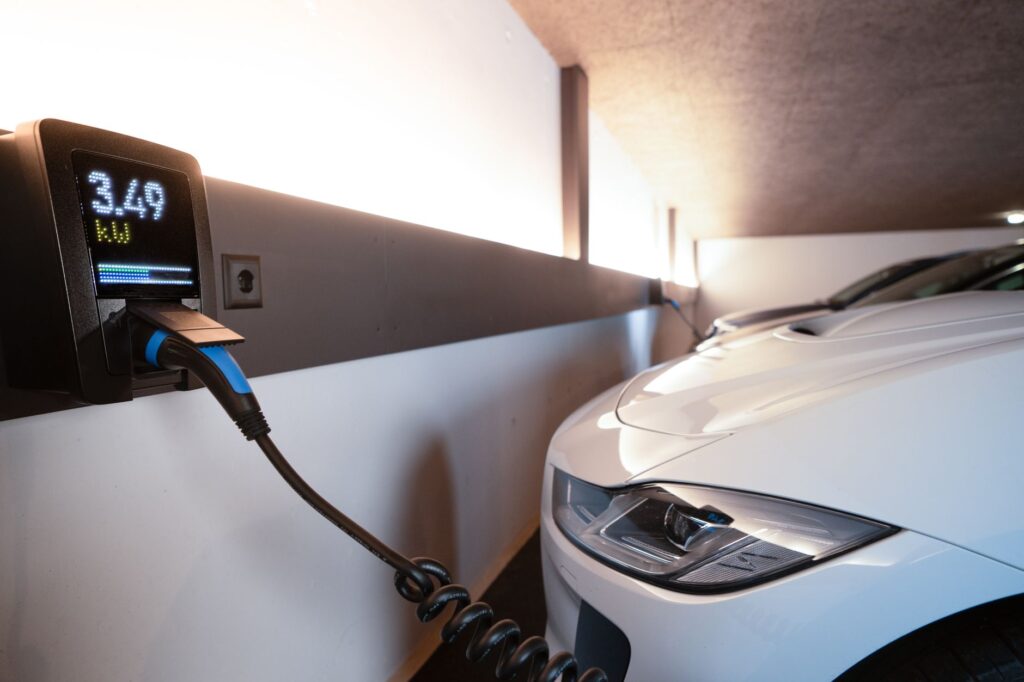
Your Next Backup Generator is Parked in the Garage: A Guide to EV Bidirectional Charging
This post may contain affiliate links. If you purchase through these links, PluggedInHome may earn a commission at no extra cost to you. Our editorial recommendations are independent.
When we talk about preparing a home for a power outage, the conversation usually revolves around noisy gas generators or expensive wall-mounted home batteries.
But what if the most powerful backup generator you could ever own is already parked in your garage?
Thanks to a rapidly emerging technology called Bidirectional Charging (specifically Vehicle-to-Home, or V2H), your electric vehicle is no longer just a way to get to work. It is a massive, rolling power plant that can keep your lights on and your fridge cold for days when the grid goes down.
What is Bidirectional Charging?
Historically, EV charging has been a one-way street: power flows from your home's electrical panel into the car's battery.
Bidirectional charging makes that street two-way. With a compatible EV and a specialized home charging station, your car can push the energy stored in its battery back into your home's electrical panel.
The Math is Staggering
To understand why this is such a game-changer, you have to look at the sheer size of an EV battery.
A standard whole-home wall battery, like a Tesla Powerwall, holds about 13.5 kilowatt-hours (kWh) of energy. That is usually enough to run a few essential appliances overnight.
By comparison, the extended-range battery in a Ford F-150 Lightning holds 131 kWh of energy. That is roughly the equivalent of ten wall-mounted home batteries. A fully charged EV can easily power an average American home for 3 to 5 days, or even up to 10 days if you strictly conserve power.
How Vehicle-to-Home (V2H) Works
Turning your car into a backup generator isn't quite as simple as just plugging it in. You need three things to make the magic happen:
- A Compatible EV: The car must be engineered from the factory to allow power to flow outward. The Ford F-150 Lightning, Chevy Silverado EV, and Kia EV9 are current leaders here, with more automakers pledging support soon.
- A Bidirectional Charger: You need a specialized wall charger (often called a V2H charger) that can manage the two-way flow of electricity.
- A Home Integration System / Transfer Switch: Just like a traditional generator, your home's electrical panel needs a transfer switch to physically disconnect your house from the utility grid during an outage. This prevents your car from trying to accidentally power your entire neighborhood.
When the grid goes dark, the home integration system automatically disconnects from the grid and signals the car to start discharging power. The transition is seamless, often happening so quickly you might not even realize the neighborhood has lost power.
The Ultimate Generator Replacement
Using your EV as a backup power source solves almost every problem associated with traditional gas generators:
- Zero Maintenance: Your EV battery is already being managed and maintained by the car. There is no oil to change or bad gas to drain.
- Silent and Safe: There are no combustion engines, no exhaust fumes, and no noise.
- Dual Purpose: Instead of spending $10,000 on a standby generator that sits idle 99% of the year, you are utilizing an asset you use every single day.
As the grid becomes more strained and power outages become more common, the electric vehicle in your driveway will become your home's most important energy appliance.
Frequently Asked Questions
Which electric vehicles support bidirectional charging (V2H)?
Currently, vehicles like the Ford F-150 Lightning, Chevrolet Silverado EV, Nissan Leaf, and Kia EV9 support bidirectional charging, allowing them to send power back to your home. Tesla has also announced support for upcoming models.
How long can an EV power a house?
An average electric vehicle battery holds significantly more energy than a wall-mounted home battery. A fully charged truck like the Ford F-150 Lightning (with a 131 kWh battery) can power an average home for 3 to 10 days depending on energy usage.


